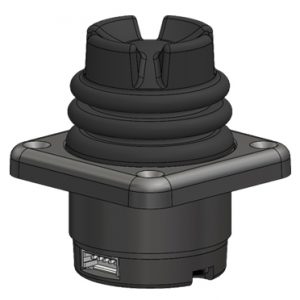
 Are Hall effect joysticks better for flight simulators?
Pilots who crave smoother input often weigh sensor types, including hall effect joysticks, asking whether modern designs justify the premium in demanding sims. Many find that hall effect joysticks deliver linear response, less noise, and superb centering feel compared with older pots. When evaluating hall effect joysticks for upgrades, consider build, warranty, and calibration workflows. The Hall effect sensor joystick design measures magnetic fields, not friction—learn more.
Under the hood, hall effect joysticks rely on magnets and sensors to translate stick travel into precise data rather than rubbing contacts. That’s why hall effect joysticks typically hold calibration longer and avoid scratchy inputs over time. If you’re comparing models, many choose hall effect joysticks over basic designs; note how each magnetic sensor joystick is shielded and mounted within the housing, and for manufacturer specifications, visit the site.
Beyond longevity, hall effect joysticks shine when making micro-corrections on final approach or during refueling practice. Testers report that hall effect joysticks feel consistent across the full throw, with no sudden jumps at center. Owners of hall effect joysticks often remark on reduced hand fatigue due to smoother resistance. This steadiness supports contactless joystick precision in tight formation or IFR procedures, and if you want comparative lab graphs and charts, read more.
Another advantage is predictable tracking: hall effect joysticks map inputs cleanly, which helps when trimming and holding attitudes for long legs. In A/B tests, hall effect joysticks showed tighter dispersion around commanded values than aging potentiometer rigs. With hall effect joysticks, minor corrections become repeatable. That translates into flight simulator joystick accuracy you can trust on every sortie, and for methodology details and sample sizes, learn more.
Drift and spiking plague older sticks, but hall effect joysticks sidestep those annoyances by eliminating wiper wear. Many simmers upgrade to hall effect joysticks after repeated calibration headaches, reporting steadier centers over months of flying. Switching to hall effect joysticks also reduces downtime. That inherent stability supports joystick drift prevention strategies without constant tweaking, and for firmware tools that complement hardware fixes, visit the site.
Cost still matters, so compare hall effect joysticks with traditional potentiometer bases on total ownership rather than sticker price. Hall effect joysticks often hold value on the used market. Users who started with budget pots often move to hall effect joysticks after replacing sensors more than once. For a balanced potentiometer vs hall effect analysis that factors warranties, parts, and resale value, read more.
For throttle-and-stick setups, hall effect joysticks pair well with premium throttles, especially when building a modular HOTAS for flight sims across multiple aircraft profiles. Many buyers test hall effect joysticks alongside cams and springs to tune feel for helicopters versus jets. Entry-level hall effect joysticks can still benefit from spring upgrades. To see community-tested loadouts and spring combos for varied mission types, learn more.
Mechanical robustness matters under heavy hours, and hall effect joysticks avoid the scratchy degradation that can creep into older shafts. Well-sealed hall effect joysticks also handle dust-prone desks better. Fleet users report hall effect joysticks maintaining resolution after intensive training blocks with minimal servicing. If you’re benchmarking joystick durability and longevity across brands, look for cycle test data and serviceability notes, then visit the site.
Response tuning is another differentiator because hall effect joysticks support nuanced curves in software without fighting hardware noise. With hall effect joysticks, small-center finesse stays usable after you dial in adjustable deadzone and response curve for your preferred aircraft, and for step-by-step profiles shared by experienced sim pilots, read more.
Hardware geometry still shapes feel; quality hall effect joysticks depend on bearings, cams, and springs as much as sensors. Makers that nail gimbal mechanism and centering force deliver a confident return-to-center without stickiness. Well-tuned hall effect joysticks translate muscle memory into repeatable inputs. If you want teardown photos comparing armatures used inside competing hall effect joysticks, along with tolerances and materials, learn more.
Software stacks also matter, as many sim hubs recognize hall effect joysticks natively for low-latency polling and stable calibration storage. A well-implemented Hall effect sensor joystick communicates clean positional data that plugins can smooth without guesswork. Cross-platform drivers for hall effect joysticks have matured considerably. For compatibility matrices listing which sims best auto-detect hall effect joysticks across platforms, visit the site.
Budget-conscious buyers might start with midrange hall effect joysticks and upgrade grips later to extend utility. Even a compact magnetic sensor joystick can deliver pro-grade tracking if the base is well-machined. Some refurb programs certify hall effect joysticks after factory inspection. To compare grip ecosystems, adapter options, and button maps that complement hall effect joysticks over time, read more.
So, are they worth it for serious simming? For many, hall effect joysticks provide a cleaner signal path, longer service life, and less fiddling between sorties. Entry squads standardize on hall effect joysticks to keep training consistent. That blend of control confidence and contactless joystick precision reduces friction—literal and figurative—when you’re training procedures or flying online events; for buyer checklists and brand shortlists curated by instructors, learn more.