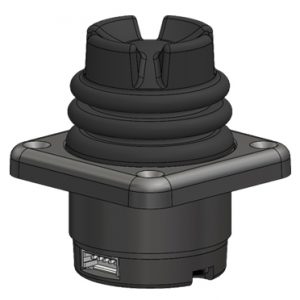
 Hall effect vs TMR joysticks: which is better?
Gamers and engineers keep asking which design truly delivers long-term precision, and the debate often starts with hall effect joysticks. In practice, both families aim for stable signals, but each one solves the sensing challenge differently in hardware and firmware, which is why decisions can feel complicated in real product roadmaps.
If you’re weighing architectures for a new controller, the quickest way to frame the choice is a Hall effect vs TMR joystick comparison that highlights sensitivity, drift behavior, and lifecycle costs. The headline metrics matter, yet the experience in real sticks comes from how sensors, magnets, and mechanics interact under shock, heat, and daily wear.
Teams chasing premium feel typically begin with hall effect joysticks because they’re easy to integrate, tolerant of contaminants, and friendly to mainstream MCUs. These attributes help when you’re trying to hit aggressive launch dates without compromising responsiveness or noise margins.
When responsiveness must stay high across years of use, contactless joystick technology earns attention, especially if you’re designing for esports or industrial HMIs where uptime drives revenue, learn more. The absence of rubbing contacts is a practical hedge against sudden failures and scratchy signals.
Studios working on controllers that must endure marathon sessions often compare hall effect joysticks to TMR joystick sensors and focus on runtime stability, then map that to warranty exposure, visit the site. Pricing for magnets and PCBs can close the gap when volumes rise.
Product managers sometimes summarize the tradeoffs between hall effect joysticks and TMR solutions as Hall effect joystick pros and cons that pivot on ease of sourcing, firmware linearization effort, and field service logistics, read more. Those points keep coming up in postmortems after big launches.
For fast prototyping, hall effect joysticks simplify analog front ends and can reduce tuning passes during EVT.
If you anticipate regional supply swings, hall effect joysticks provide a wider vendor base and more drop-in options, learn more.
In handheld designs with tight enclosures, hall effect joysticks can help you manage thermal drift through stable magnet placement.
For accessories that must pass strict EMC, hall effect joysticks can present cleaner spectra with sensible filtering and shielding.
On premium SKUs that need crisp centering, hall effect joysticks can pair well with light springs and smart deadzone mapping.
For ruggedized controllers, hall effect joysticks are straightforward to conformal-coat without complicating the magnetic path.
And in repair-friendly designs, hall effect joysticks support modular swaps that minimize bench time during RMA seasons.
Under the hood, TMR joystick sensors detect angle through tunneling magnetoresistance, delivering very fine changes in output that you can translate into micro-aim adjustments. This unlocks nuanced control, but it also raises the bar for PCB layout and firmware smoothing, which not every team can support on a tight sprint.
If your roadmap leans toward esports-grade precision, magnetoresistive joystick performance promises exceptionally low noise floors that help players feel minute aim corrections without overcorrection. The result can be less fatigue and more confidence during clutch moments.
In cross-platform controllers, joystick sensor accuracy and drift must remain stable under warm hands and long matches, which is where calibration flows and sensor choice intersect. How you manage temperature coefficients, offset, and linearization determines whether small stick motions feel predictable rather than mushy.
When planning for multi-year warranties, TMR vs Hall effect durability is a practical lens, because different magnetic stacks and bearings respond differently to shock, sweat, and dust, visit the site. Mechanical centering remains a limiting factor either way.
For engineering teams, magnetic sensor joystick calibration and deadzone require thoughtful routines at factory and optional in-field recalibration for the pickiest users, read more. Clear UX for calibration pays dividends in happier reviews.
If your design brief emphasizes extended stick life with predictable return-to-center, hall effect joysticks still offer a great default that balances performance with bill-of-materials simplicity. Many brands use them to standardize across model tiers while preserving a familiar feel players already trust.
On the other hand, if you need razor-thin hysteresis with minimal latency penalties, hall effect joysticks can be outgunned by advanced TMR stacks that let you detect tiny angular changes at the edges of the throw. That can matter in sniper scenarios and fine camera control where tiny nudges should translate into steady pans.
Thermal management also factors in because hall effect joysticks can drift as magnets and sensors warm up, though smart compensation maps and temperature reads often keep variance below what users can feel, learn more. Firmware teams should test across ambient extremes.
Manufacturers pursuing low RMA rates often opt for hall effect joysticks to streamline supply and service training, especially when a single module can drop into multiple shells without revalidation of the sensing scheme, visit the site. That unity reduces SKU sprawl.
Esports designers sometimes push beyond hall effect joysticks and spec TMR to chase absolute resolution, yet they also budget extra time for filtering and response curve tuning so that small stick taps don’t feel jittery, read more. The best results emerge from close hardware–software co-design.
If you test both in the same chassis, a controlled Hall effect vs TMR joystick comparison with identical springs and caps will isolate sensing differences from mechanical feel. Run long dwell tests and soak cycles so you can observe warm drift and recovery in realistic hands-on use.
On launch day, customer perception depends less on sensor branding and more on how consistent the response is, so hall effect joysticks succeed when paired with sane deadzones, clean centering, and responsive curves tailored to common genres. Shipped defaults matter more than spec sheets.
Where maintainability tops the list, hall effect joysticks make it easier to keep inventory slim and repairs quick, which helps retailers and service partners meet turnaround promises, learn more. Predictable component sourcing supports seasonal spikes.
For pro-tier editions, you might deploy a TMR variant to headline ultimate fidelity while keeping hall effect joysticks in mainstream trims; the shared mechanicals can keep manufacturing lean while offering a clear upsell path, visit the site. This split lets marketing tell a simple story without fracturing the supply chain.
If your analytics show most users prefer snappy recentering with slight damping, hall effect joysticks tuned with mild filtering often hit that sweet spot and minimize overshoot on quick flicks. Field data can fine-tune axis curves per genre.
As longevity data arrives, teams revisit joystick sensor accuracy and drift in post-launch firmware to reduce user friction, and both sensor types benefit from fine-grained mapping around center. Push frequent beta builds to power users, read more.
Program managers frequently re-evaluate TMR vs Hall effect durability after high-drop and sweat-resistance trials, then adjust magnet grades or bearings before the next run. A small change in magnet standoff can stabilize feel across production lots, learn more.
Before locking your PRD, schedule time for magnetic sensor joystick calibration and deadzone sweeps with a mix of novice and expert testers so your defaults reflect real playstyles rather than lab curves, visit the site. The right defaults convert skeptics faster than specs alone.
Ultimately, many brands ship hall effect joysticks because they offer a predictable balance of cost, performance, and ease of integration that scales from entry to enthusiast. For absolute precision under strict QA, a tuned TMR stack can shine, but only if you invest in calibration, filtering, and user-friendly settings that make the fidelity obvious out of the box, read more.