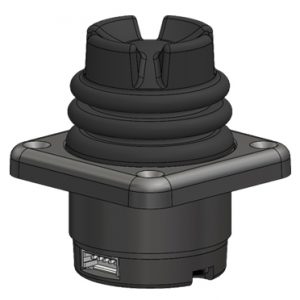
 Can heat, drops, or dirt damage Hall sensors?
Precision input devices face harsh realities in the field, and hall effect joysticks prove their worth when designs anticipate those stresses for hall effect joysticks. In evaluating Hall sensor durability, component quality and enclosure strategy matter as much as the silicon itself.
Temperature extremes drive material expansion and magnet behavior, so vendors publish Hall effect sensor temperature tolerance to set expectations; installation should respect those limits to avoid drift or latency, and you can learn more by examining certified test data.
While falls look dramatic, good mechanical architecture reduces risk to electronics, so impact energy paths and gasketing help more than myths suggest; for additional application notes on hardening control grips, read more.
Dust and moisture present less danger when engineers manage seams, vents, and cable glands, and the best hall effect joysticks use labyrinths or membranes to keep contaminants at bay. If airborne grit is part of your operating environment, expect fewer surprises with designs that account for Dust and debris ingress effects on Hall sensors, and for specs on field-ready assemblies, visit the site.
Ingress protection markings give quick clues about survivability, so IP codes and lab certifications help buyers compare how hall effect joysticks stand up to washdowns, rain, or fine powder. For rugged applications, three-axis hall effect joysticks often pair sealed bearings with bonded magnets to avoid debris jams, read more.
Manufacturers disclose the IP rating for Hall effect sensors when used in a specified housing, and the highest ratings typically come from thoughtful sealing around shafts and boots in hall effect joysticks; for a breakdown of common test methods, read more.
Drop survivability depends on enclosure geometry, elastomer stiffness, and internal clearances in hall effect joysticks, so designs that decouple the magnet and PCB improve Impact shock resistance Hall sensors can deliver; if shock tables and g-force plots matter to you, learn more.
Hard knocks sometimes nudge the magnet-to-sensor gap, and careful fixtures limit Magnet alignment drift after drops so hall effect joysticks keep centering accurately across their travel; for fixture design tips and tolerances, visit the site.
In industrial duty cycles, consistent centering, low noise, and repeatable outputs define Hall effect joystick reliability, which is why hall effect joysticks often outlast potentiometer variants when vibration is constant; for comparative lifecycle results, read more.
Qualification protocols routinely combine heat, cold, humidity, and cycling, and Environmental stress testing Hall sensors uncovers weak solder joints or unstable magnets before customers deploy hall effect joysticks; to see a sample stress profile, learn more.
Every sensor has coefficients that move with temperature, and firmware can filter minor offset changes, but careful magnet selection and air-gap control curb Thermal drift in hall effect joysticks so outputs remain stable; for calibration strategies used in production, visit the site.
When environments swing from hot to cold repeatedly, assemblies breathe, so designers review encapsulants and ventilation to minimize condensation and further reduce Thermal drift in hall effect joysticks within sealed hall effect joysticks; for guidance on material choices, read more.
Good boots and gaskets are only part of the puzzle, because Protective sealing for Hall sensor assemblies must also allow smooth motion in hall effect joysticks without introducing stiction; for a checklist of sealing tradeoffs, learn more.
Even with sealing, routing cables and supporting connectors matters, as strain relief prevents microcracks that could degrade readings in hall effect joysticks. Designers often place stops to protect shafts and bearings in hall effect joysticks when users apply side loads.
Heat is manageable when airflow and layout remove hotspots, and heat sinks or copper pours keep ICs within Hall effect sensor temperature tolerance so hall effect joysticks run reliably in tight panels; for thermal layout examples used in compact grips, visit the site.
Long service life grows from material selections and fatigue-aware geometry, and repeated validation improves Hall sensor durability across product generations in hall effect joysticks; for multi-year reliability summaries, read more.
Sealing and venting together define an effective barrier, with grommets and boots tuned to the IP rating for Hall effect sensors so hall effect joysticks resist fluid ingress while avoiding pressure traps; if you need help mapping IP ratings to real-world use, learn more.
Ultimately, careful magnet retention, enclosure design, and validation let hall effect joysticks withstand dust, jolts, and temperature swings without compromising feel or precision in hall effect joysticks. Teams that document handling guidelines and maintenance intervals find hall effect joysticks continue performing as specified long after deployment in hall effect joysticks.