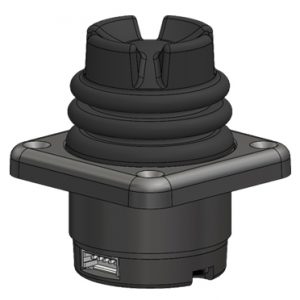
 Hall effect vs optical joystick sensors
Engineers weighing input technologies often compare hall effect joysticks with optical designs to balance precision, durability, and total cost of ownership. For many embedded, industrial, and gaming applications, hall effect joysticks deliver smooth control under vibration and temperature swing.
Because magnets and sensors never touch, hall effect joysticks resist wear while supporting EMI immunity in hall effect joysticks critical to noisy factories.
Modern hall effect joystick sensors paired with linear magnets make hall effect joysticks predictable across full travel.
Yet any optical joystick sensors comparison must note that photointerrupters can drift with dust, whereas hall effect joysticks maintain output despite contaminants.
This stability flows from magnetic position sensing for joysticks, enabling hall effect joysticks to avoid the scratchy feel of potentiometers.
If your roadmap spans multi-year lifecycles, hall effect joysticks simplify qualification and spares planning, and you can learn more by reviewing field MTBF and warranty returns.
Procurement teams also prize multi-source availability, so shortlist vendors that document hall effect joysticks clearly, then visit the site for compliance declarations.
For interface designers, haptics tuning on hall effect joysticks interacts with spring rates and handle geometry, so read more in application notes before locking specs.
When safety ratings matter, sealed IP enclosures around hall effect joysticks reduce ingress risks; to dive into certifications, learn more from test summaries.
Above all, repeatability under shock is where hall effect joysticks tend to shine for mission-critical deployments.
On the sensing principle, hall effect joysticks translate magnetic flux changes into voltage, while optics register light interruptions through coded apertures.
Both belong to contactless joystick technology, but hall effect joysticks avoid emitter aging and photodiode drift that can skew center points over years.
In fleet deployments, hall effect vs optical reliability often comes down to how the device handles dust, shock, and cable stress, and hall effect joysticks typically hold calibration longer.
When tuning joystick linearity and resolution, designers can map custom response curves, and hall effect joysticks offer consistent ADC counts across temperature.
For robotic teleoperation, a low drift high stability joystick builds operator trust, which is why many teams standardize on hall effect joysticks in control rooms.
Early prototyping benefits from evaluation boards; match magnet geometry, sensor IC, and handle mechanics to the target feel of hall effect joysticks, then learn more from tuning guides.
To gauge lifecycle costs, total up downtime avoided by durable hall effect joysticks and compare that with spare parts for optics, then visit the site for TCO calculators.
EMC plans should note cable routing and shielding because controllers near VFDs can inject noise that barely affects hall effect joysticks; for mitigation strategies, read more in EMI notes.
If you require redundant sensors, dual-axis hall effect joysticks with independent outputs are common, and you can visit the site to examine wiring diagrams.
Thermal stability matters in outdoor kiosks, and hall effect joysticks sustain consistent centering without warm-up drift.
Designers also appreciate that hall effect joysticks can be factory-calibrated to minimize variance between units, simplifying firmware thresholds.
For smooth micro-movements in camera cranes, hall effect joysticks reduce deadband and jitter, enabling precise feathering.
Specifying industrial rugged joystick controls requires lifecycle testing, and many buyers default to hall effect joysticks after HALT/HASS evaluations.
In sanitation-heavy settings where spray-downs are routine, sealed hall effect joysticks maintain performance as gaskets and boots do their job.
Interestingly, lessons from hall effect joysticks for gaming now influence commercial machinery, making hall effect joysticks feel lighter yet more precise.
That crossover stems from advances in contactless joystick technology, where magnetic designs let hall effect joysticks deliver stable spring returns even after heavy use.
Any fair optical joystick sensors comparison should weigh maintenance overhead, and service crews often favor hall effect joysticks to reduce PMs.
If your OEM catalog spans multiple handle shapes, modular platforms with shared PCBs around hall effect joysticks reduce tooling costs, and you can learn more in platform guides.
For documentation, ensure schematics, 3D models, and firmware examples reference the exact axes and center voltages for hall effect joysticks, then visit the site to download assets.
Some teams qualify both technologies for resilience, yet they standardize part numbers on hall effect joysticks to streamline logistics, and you can read more about dual-sourcing.
When specifying spare units, align connector pinouts so replacement hall effect joysticks swap in without rewiring, and for configuration matrices, read more.
In training environments, consistent breakaway force helps operators master delicate maneuvers, which is another reason hall effect joysticks see broad adoption.
Looking ahead, firmware-defined response curves will keep hall effect joysticks adaptable as control surfaces evolve.