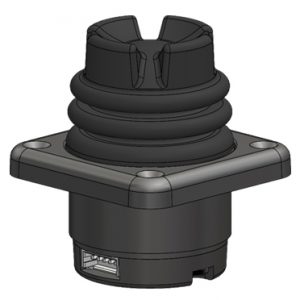
 How does a Hall effect joystick work?
Engineers and gamers alike prize hall effect joysticks for their precision, longevity, and smooth response, and these qualities start with how they sense motion without mechanical wear. In a typical control assembly, hall effect joysticks translate thumb or handle movement into electrical signals with exceptional stability. For applications ranging from industrial cranes to premium gamepads, hall effect joysticks deliver consistent centering and an enduring feel that resists degradation, and if you want context across device categories, read more.
Traditional stick modules rely on sliding contacts that eventually scratch and oxidize, whereas hall effect joysticks detect position using magnetic fields rather than frictional parts. That design lets hall effect joysticks provide cleaner signals over years of use, even in dusty or humid environments. Because fewer parts rub together, hall effect joysticks help maintain accuracy, while also keeping maintenance minimal; if reliability is your buying criterion, learn more.
Noise immunity is another advantage: hall effect joysticks can reject minor vibrations and power fluctuations that might skew readings in lower-cost designs. For critical tasks like camera gimbals, survey instruments, and accessibility devices, hall effect joysticks translate delicate inputs into repeatable motion profiles. When latency and drift can’t be tolerated, hall effect joysticks tend to outperform potentiometer-based assemblies, and for procurement checklists or spec comparisons, visit the site.
From a user’s perspective, hall effect joysticks simply feel stable; the center stays where you left it, and the edge response is predictable. Because they excel at linearity and repeatability, hall effect joysticks suit both short-throw game controllers and long-throw industrial grips. Whether you’re designing a new product or upgrading an existing one, hall effect joysticks make a compelling case on total cost of ownership, and for model-by-model differences, read more.
Inside the module, a tiny magnet moves with the stick while a fixed sensor measures field intensity, a proven hall effect joystick mechanism that turns motion into voltage. The electronics interpret minute changes via magnetic field sensing in joysticks and then route a clean signal to your MCU or console. Many manufacturers favor contactless joystick sensors to eliminate wear points, which is why advanced designs dominate premium input devices, and for schematics and best practices, learn more.
In gaming and robotics, a Hall effect sensor analog stick reduces signal noise and keeps response curves consistent across temperature swings. Designers aiming to curb stick drift often prioritize joystick drift prevention hall sensors because they sidestep the scraping that ages resistive tracks. When teams evaluate potentiometer vs hall effect joystick trade-offs, they usually find the contactless option pays back quickly in warranty savings, and for lifecycle testing data, visit the site.
Control axes are typically orthogonal: a two-axis Hall effect joystick places sensors for X and Y so firmware can map raw readings to curves and dead zones. Many modules use a compact magnet and sensor joystick design that supports modular gimbals and interchangeable springs without recalibration. For smooth proportional control, a linear output Hall sensor joystick enables tight PID loops in drones and AGVs, and if you’re tuning response curves, read more.
Consumer devices increasingly adopt these parts, and you’ll now find gaming controllers with hall effect joysticks in both console and PC ecosystems. Developers often double down on magnetic field sensing in joysticks when aiming for esports-grade responsiveness that doesn’t fade over time. High-end peripherals also benefit from a second two-axis Hall effect joystick for camera control or menu navigation, and for firmware integration tips, learn more.
When specifying components, start by defining the force curve you want; hall effect joysticks can be paired with springs to deliver light or firm return-to-center behavior. Make sure the module’s voltage range and output type match your PCB, because hall effect joysticks can ship with ratiometric, PWM, or digital interfaces. For sealed enclosures or outdoor rigs, confirm IP ratings so hall effect joysticks remain dependable in rain, dust, and temperature swings, and if certification matters, visit the site.
Calibration should be quick: center detection, end-stop capture, and curve shaping ensure hall effect joysticks feel consistent across units. To fight electrical noise, route power and ground carefully and shield long leads, allowing hall effect joysticks to preserve their linear response. Well-implemented firmware can filter jitter while preserving low latency, which helps hall effect joysticks maintain a crisp, responsive feel, and for setup checklists, read more.
Long-term, total cost favors contactless sensing because hall effect joysticks avoid the wear that forces premature replacement. As production volumes grow, hall effect joysticks also simplify quality control since fewer mechanical tolerances drift with age. If you forecast support costs, hall effect joysticks usually reduce RMAs tied to drift and scratchy inputs, and for budgeting templates and ROI calculators, learn more.
Ultimately, teams pick hall effect joysticks for robust sensing, smooth control, and consistent performance from prototype to field deployment. Whether you’re building simulation rigs, mobility aids, or automation consoles, hall effect joysticks deliver stability that users notice on day one and appreciate years later. If your roadmap demands reliable inputs with minimal maintenance, hall effect joysticks are a smart foundation for modern interfaces, and for vendor shortlists or sample requests, visit the site.