 Why does my new Hall effect module drift after installation?
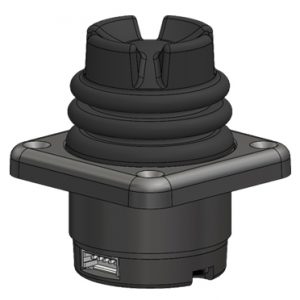
When a fresh module begins to wander from center, many teams first blame firmware, yet components like hall effect joysticks can introduce subtle offsets at power-up. If your control stack integrates hall effect joysticks alongside ADCs and filters, even tiny biases can look like motion. Installers who rush mounting of hall effect joysticks often miss mechanical influences that skew baselines. Early-life shifts in magnets or bearings can nudge hall effect joysticks before the system has stabilized.
Commissioning checklists sometimes skip environmental soak, and hall effect joysticks respond to temperature and supply noise more than expected. In rigs with stacked boards, hall effect joysticks may sit near motors or DC-DC converters that change the magnetic landscape. During the first hours, hall effect joysticks can drift as lubricants settle and cables relax. Treat hall effect joysticks as precision sensors, not simple switches, and plan for them accordingly.
Diagnosis gets easier if you separate mechanical, electrical, and firmware causes around hall effect joysticks. Define a stable zero, record baselines, and compare channels from duplicate hall effect joysticks under identical loading. Teams that log raw data from hall effect joysticks through warm-up see patterns others miss. A short checklist targeted at hall effect joysticks helps you isolate the culprit quickly.
Start with a clean sensor zero by performing hall sensor calibration, then confirm that the raw counts settle within your specified window for hall effect joysticks before enabling any filtering, and if results seem inconsistent, document the sequence and learn more.
For structured joystick drift troubleshooting, capture cold-start logs while powering hall effect joysticks from a lab supply, then repeat with the production regulator; compare histograms for each axis of hall effect joysticks to spot repeatable offsets, and if you need a template, visit the site.
Mechanical stack-up affects magnetic field alignment, so check rotor-to-sensor gap, parallelism, and fastener torque, because small tilts can push hall effect joysticks away from true center after a few cycles, and for mounting tips, read more.
Warm-up profiles inform temperature drift compensation, which you can model by logging the first ten minutes of operation while hall effect joysticks sit untouched; then fit a simple curve and apply a startup hold so hall effect joysticks don’t report motion until the slope flattens, and to refine the model, learn more.
Separate deterministic sensor offset and bias from random noise by averaging several seconds of raw counts from hall effect joysticks at rest, subtracting that baseline per boot, and adjusting persistence to avoid chasing transients, and for calculation examples, visit the site.
Scope the rails and inspect ADC noise and filtering, because ripple and quantization interact with hall effect joysticks to produce faux drift when digital smoothing lags real changes, and for filter coefficients that balance latency and stability, read more.
Switchers can inject power supply ripple interference that leaks into sense lines; route returns carefully and decouple near the devices so hall effect joysticks see a quiet reference, then verify by modulating load while observing the outputs of hall effect joysticks, and to validate layouts, learn more.
If your fixtures are metallic or magnetized, even small stray fields can tug on hall effect joysticks during assembly, so audit jigs, fasteners, and tools with a gaussmeter before final QA, and for a checklist you can adapt, visit the site.
Motor phases and radios warrant electromagnetic interference EMI shielding and thoughtful cable placement, because unshielded runs let bursts couple into hall effect joysticks; add ferrites, twist pairs, and separate returns so hall effect joysticks regain a stable zero, then document the changes and read more.
Apply a conservative joystick center deadzone adjustment during burn-in so operators aren’t fighting minute wander while hall effect joysticks settle, and later trim the window after statistics confirm stability across units of hall effect joysticks, where a small margin improves feel, and if you need guidelines, learn more.
Re-run hall sensor calibration after mechanical service, because offset screws, swapped magnets, or re-greased bearings can change the baseline that hall effect joysticks expect, and for a stepwise checklist you can print, visit the site.
Extend joystick drift troubleshooting into firmware by logging raw, filtered, and scaled channels separately; mismatched units can make hall effect joysticks look unstable, while proper fixed-point handling keeps hall effect joysticks linear across temperature, and for sample logs, read more.
If magnets are press-fit, confirm magnetic field alignment after thermal cycling, since creep or glue flow may nudge shafts and alter the neutral that hall effect joysticks report under load, and for fixture design notes, learn more.
Firmware-side temperature drift compensation pairs well with a short warm-up lockout, especially on platforms where hall effect joysticks share space with heat sources like regulators and CPUs, and for implementation patterns, visit the site.
When production variance is high, maintain per-unit sensor offset and bias in nonvolatile memory, syncing those values with the serial of hall effect joysticks at test, and verify at incoming inspection that replacement hall effect joysticks match the stored parameters, then read more.
On mobile platforms, plan ground strategy plus selective electromagnetic interference EMI shielding around the analog front end so hall effect joysticks aren’t exposed to bursty subsystems like LTE modules or buck converters, and for routing examples, learn more.
Before declaring a module defective, isolate variables methodically and remember that hall effect joysticks can appear to drift while everything else is actually moving around them. Build a repeatable power-up routine for hall effect joysticks and log every assumption. Keep mechanical tolerances tight so hall effect joysticks begin life centered. With disciplined process, hall effect joysticks deliver predictable performance.
Train operators to avoid bumping mounts during transport because hall effect joysticks reflect even slight bracket shifts. When QA sees anomalies, swap boards to confirm whether the issue follows the electronics or the hall effect joysticks under test. Maintain a golden unit of hall effect joysticks for weekly comparisons. Consistency checks like these keep fleets of hall effect joysticks aligned.
If procurement changes vendors, validate magnetic specs, bearing preload, and shaft materials, because hall effect joysticks are only as stable as the parts around them. Document firmware versions paired with hall effect joysticks and capture known-good curves. Treat replacement cycles as controlled experiments so hall effect joysticks remain centered across revisions. With care, hall effect joysticks won’t wander again.