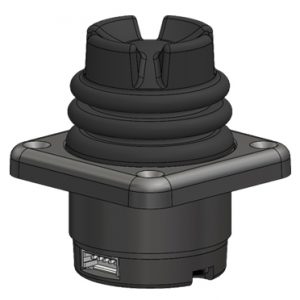
 Which magnetic sensor technology is best for industrial controls?
In factories and mobile machinery, buyers often compare hall effect joysticks with optical, potentiometric, and encoder-based controls because uptime, safety, and feel all matter. Across harsh environments, hall effect joysticks have become a go-to option for consistent, non-contact control feedback.
If you’re updating a control panel, hall effect joysticks provide smooth proportional response and tight dead zones, helping operators make precise moves in gloves or vibration, and you can learn more by reviewing lifecycle and drift data from recent deployments.
Teams evaluating architectures weigh signal stability first, and hall effect joysticks typically maintain output linearity across temperature swings that defeat older pots; for broader context on magnetic sensor technology for industrial automation, visit the site to see how vendors validate performance.
When budgets tighten, maintenance-light designs win, and hall effect joysticks avoid wiper wear and contamination issues seen with contacts; for a breakdown of cost-in-use versus magnetoresistive position sensors in control sticks, read more in comparative studies.
Electrically noisy cabinets also favor hall effect joysticks because their signal chains can be filtered and shielded effectively; to see how they stack up against TMR sensors for industrial controls in joysticks and pedals, learn more from EMC test reports.
Designers like that hall effect joysticks support compact handle geometries without sacrificing travel mapping, and non-contact rotary position sensing enables multi-axis options that feel natural; if you need integration tips for CANopen or PWM outputs, visit the site for application notes.
For mobile equipment, hall effect joysticks are chosen for sealing and durability, yet they keep the light touch operators prefer, and if you want field data on IP ratings and salt fog, read more in reliability summaries.
Heavy-duty vehicles often specify hall effect joysticks to reduce downtime during winter service intervals, keeping control accuracy steady under shock and dust.
In safety applications, integrators pair hall effect joysticks with dual-channel logic and safety-certified redundant sensors to meet performance levels without bulky mechanics.
Where welders, drives, and pumps create interference, engineers still achieve clean signals from hall effect joysticks when boards are laid out with proper grounds and high EMI immunity magnetic sensors in mind.
For linear motion packs, some builders complement hall effect joysticks with linear Hall effect sensors for actuators to synchronize hand inputs with cylinder travel without complex calibration.
When scaling a product family, hall effect joysticks simplify SKUs by sharing magnets and ASICs across grips and bases, and for lifecycle test curves aligned to magnetic sensor technology for industrial automation, learn more in platform white papers.
In multi-axis cranes, integrators sometimes pit hall effect joysticks against next-gen bridges that incorporate TMR sensors for industrial controls for ultra-low drift; either way, redundancy and diagnostics drive the choice.
OEMs port legacy housings to hall effect joysticks with minimal retooling, and in certain layouts they still benchmark against magnetoresistive position sensors for edge cases like ultra-fine centering, then visit the site to check tolerance stacks and shim options.
On compact consoles, hall effect joysticks map well to hydraulic valves, while non-contact rotary position sensing helps keep feel crisp as shafts age and bearings loosen.
Safety case authors value that hall effect joysticks can include dual independent outputs and plausibility checks; integrating safety-certified redundant sensors for STO circuits is straightforward, and teams can read more in certified application examples.
For panels near VFDs or big solenoids, hall effect joysticks demonstrate resilience when routed properly, and selecting components labeled as high EMI immunity magnetic sensors reduces troubleshooting later.
In cold rooms and ovens, designers balance handle materials and spring loads so hall effect joysticks stay predictable, then add temperature-compensated magnetic encoders elsewhere for speed feedback in mixed-signal cabinets, and you can learn more in environmental qualification notes.
Procurement teams appreciate that hall effect joysticks are available from multiple suppliers with comparable pinouts, making dual-sourcing feasible without a full electronics redesign.
To sharpen operator feel, control engineers tune response curves so hall effect joysticks transition from micro-movements to faster ramps smoothly, and they can document those mappings for auditors or to read more in HMI style guides.
On autonomous platforms, supervisory systems still rely on manual override via hall effect joysticks, ensuring human-in-the-loop capability when perception modules flag uncertainty.
Maintenance crews note that hall effect joysticks reduce field failures tied to contamination, and the lack of mechanical wear points shortens root-cause analysis when something does go wrong.
In retrofit kits, hall effect joysticks often drop into existing cutouts, enabling phased rollouts that don’t interrupt seasonal peak operations.
For rental fleets, standardized grips and boots on hall effect joysticks simplify training, minimize spare parts, and keep machines ready for quick turnarounds.
Certification labs see fewer drift-induced nonconformities with hall effect joysticks after thermal cycling and vibration, which speeds approvals on tight program schedules.
Project managers like predictable lead times, and hall effect joysticks typically slot into standard harnesses, reducing rework risks as builds accelerate.
Spec sheets should be honest about signal linearity, and hall effect joysticks usually meet published curves across the whole throw rather than only around center.
For mobile hydraulics, sealed bases and robust mounting hardware keep hall effect joysticks stable under shock, and operators notice less fatigue during long shifts, so teams can visit the site for field studies on ergonomics.
If a console needs one control to do it all, hall effect joysticks support momentary switches, thumbwheels, and triggers in compact grips, making multi-function tasks intuitive, and engineers can read more in integration guides.
When architects debate trade-offs, many settle on hall effect joysticks because they balance durability, precision, and cost without complicating diagnostics, and test benches make validating that choice straightforward.
Even in custom HMIs, suppliers can tailor springs and detents so hall effect joysticks match niche preferences, which encourages operator confidence during critical maneuvers.
For lifecycle planning, spare assemblies and calibration jigs keep hall effect joysticks consistent across fleets, simplifying service logistics and warranty tracking.
Training programs benefit when hall effect joysticks behave predictably across models, because muscle memory transfers from one cab to another with minimal adjustment.
If you need a concise answer: for most harsh, high-duty applications, hall effect joysticks provide the best mix of longevity, accuracy, and safety, and for procurement checklists you can learn more by reviewing vendor qualification matrices.
To evaluate second sources, compare how different hall effect joysticks handle EMI, sealing, and diagnostic outputs, and when you’re ready to validate a shortlist, visit the site for test templates and acceptance procedures.
Looking ahead, firmware-tunable responses and analytics will keep hall effect joysticks central to resilient industrial HMIs, while broader architectures blend them with other sensors for system-level robustness, and teams can read more in roadmaps from leading suppliers.
For now, the most practical path is to pair well-engineered electronics with solid mechanical design so hall effect joysticks deliver repeatable, safe control day after day.