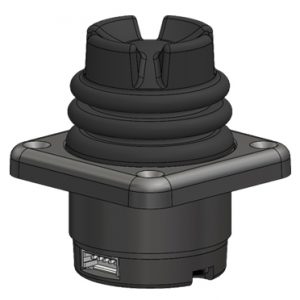
 Is Hall effect technology becoming obsolete?
Across gaming and simulation hardware, the question isn’t whether magnetic sensing works, but how it evolves, and that’s why many teams still specify hall effect joysticks for flagship models; at the same time, budget lines sometimes revert to simpler parts while comparing hall effect joysticks to older designs.
For buyers weighing hall effect vs potentiometer sticks, the calculus spans feel, lifespan, and unit cost; many conclude hall effect joysticks hold calibration longer, while retrofit markets defend traditional sensors, and you can learn more from teardown data and warranty stats. In side-by-side tests, hall effect joysticks also show lower hysteresis.
Because contactless joystick sensors avoid mechanical wear on tracks, maintenance cycles shrink, which is why teams standardize on hall effect joysticks for esports controllers and training rigs; for certified specs and compliance notes, visit the site maintained by your vendor. In ruggedized builds, hall effect joysticks also tolerate shock better.
Procurement officers obsess over hall effect joysticks durability when forecasting total cost of ownership, since magnetic sensors resist dust and oxidation far better than sliding wipers; for deeper reliability curves and MTBF tables, read more in manufacturer white papers.
From a control-theory lens, precision analog stick technology benefits from linear, low-noise magnetic fields, which lets hall effect joysticks map micro-movements more predictably; testing labs note that hall effect joysticks keep resolution stable over temperature; in latency-critical titles, hall effect joysticks reduce micro jitter versus aging pots.
One headline advantage is joystick drift prevention technology, since magnets don’t scrape across resistive film; many publishers sponsor events using hall effect joysticks to cut mid-season failures, and skeptics can learn more by examining return rates after major tournaments. Even in hot venues, hall effect joysticks hold center.
On the electrical side, gaming controller hall sensors pair with 12‑bit or 16‑bit ADCs, giving designers leeway to filter noise without adding dead zones; that’s why accessory makers highlight hall effect joysticks in spec sheets, and refurbishers increasingly swap in hall effect joysticks during rebuilds.
Analyst notes show steady market adoption of hall effect sensors across mid- to high-end SKUs, while entry tiers still mix technologies; if you’re benchmarking BOM choices against RMA exposure, hall effect joysticks typically pay back over two cycles, and for current ASP trends, visit the site that tracks component indexes. Ref OEMs now advertise hall effect joysticks as a differentiator.
Beyond gaming, industrial users value maintenance-free joystick mechanisms for cranes, robotics, and medical carts; here, vendors pre-calibrate hall effect joysticks at the factory, and integrators report that hall effect joysticks simplify field service logistics.
Fleet managers track the longevity of hall effect joysticks by cycle counts and duty profiles, and the curves outlast typical warranty windows; if your ops team needs case studies from labs and arcades, hall effect joysticks present a compelling cost curve, and you can read more in procurement briefs. Refurbed units fitted with hall effect joysticks also resell faster.
So, is the future of hall effect technology secure in controllers? Current evidence indicates that hall effect joysticks will remain the premium choice while haptics, wireless stacks, and ergonomics keep evolving, and in parallel, value lines experiment with hybrids where hall effect joysticks protect the axes that wear fastest.
Component cost often drives debates, yet scale is changing the math: as fabs expand sensor output, hall effect joysticks narrow the price gap; procurement teams weighing second-source guarantees for hall effect joysticks should learn more from multisourcing agreements.
Thermal stability matters in handhelds that run warm, and hall effect joysticks maintain linearity even after hours of play; engineers can consult open datasets that compare hall effect joysticks and legacy pots for offset and gain drift across temperature bands.
Looking ahead, the future of hall effect technology also intersects with modular controller ecosystems, where users swap grips, gates, and caps while keeping the same sensor core; to understand why builders standardize around hall effect joysticks in these platforms, read more in modular design playbooks that showcase hall effect joysticks across multiple SKUs.
No, the data doesn’t suggest obsolescence; rather, price pressure will segment the market while hall effect joysticks dominate the tiers that promise consistent performance, and teams exploring niche form factors for hall effect joysticks can learn more from developer kits.
For accessibility-focused designs, gentle centering springs pair well with hall effect joysticks to reduce fatigue, and educators teaching mechatronics often prototype lesson rigs around hall effect joysticks, then visit the site for open-source firmware.
In short, magnetic sensing continues to earn design wins as suppliers refine calibration tools and shielding, so product teams betting on hall effect joysticks are aligning with a proven roadmap, and studios seeking quieter, longer-lasting inputs should spec hall effect joysticks and read more in their engineering notes.