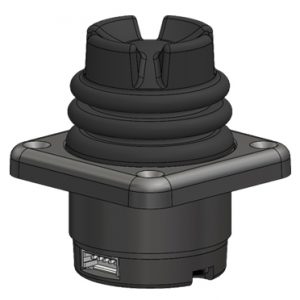
 Is TMR more power-efficient than Hall effect?
Engineers comparing input devices for compact controllers often ask whether switching to TMR will materially improve efficiency over hall effect joysticks, and the short answer is that it frequently does under low-duty-cycle operation. In practice, hall effect joysticks can meet mainstream needs, yet TMR architectures raise compelling possibilities when power budgets are tight and response linearity is critical under small fields, a contrast that directly informs TMR vs Hall sensor power consumption.
For builds constrained by tiny batteries, designers evaluate the sensor, the magnet, the amplifier path, and the MCU sampling scheme around hall effect joysticks, and they also explore duty-cycling and filter choices in pursuit of low power joystick position sensing, learn more.
When plotting baseline current, a consistent method is to run identical sampling intervals for hall effect joysticks and then repeat under the same conditions with a TMR-based module, accounting for Hall effect joystick current draw in continuous and pulsed modes; this apples-to-apples approach clarifies real-world differences between competing stacks built around hall effect joysticks.
Portable products that must run for days often see a measurable battery life impact of Hall effect joysticks when designers leave the sensor biased at all times, whereas a TMR bridge can sleep deeply and wake swiftly, keeping hall effect joysticks as a reference for comparison while quantifying wake latency and accuracy, visit the site.
Gamers expect smooth centering and predictable curves, so developers benchmark hall effect joysticks alongside TMR prototypes, watching resilience to temperature swings and shock events while tuning debounce and calibration tables around hall effect joysticks, read more.
To set expectations, I advise teams to spec current at the system level with hall effect joysticks, map signal-to-noise under realistic stick motion, define calibration guardrails for hall effect joysticks, and plan enclosure shielding around hall effect joysticks, then lock test points so future firmware tweaks still characterize the same hall effect joysticks, learn more.
On the physics side, tunnel magnetoresistance joystick sensors pair a magnet and an MTJ stack to yield large resistance changes under small fields, which can reduce the analog gain needed compared with hall effect joysticks.
Translating that to board-level choices, teams compare magnetoresistive vs Hall effect efficiency by logging microamp-hours across a scripted test: spin through quadrants with hall effect joysticks, repeat with TMR, analyze duty cycles and filtering cost, and confirm thermal stability around hall effect joysticks, visit the site.
Because of high intrinsic gain, TMR sensor sensitivity and noise can enable lower-voltage operation in some designs; that lets firmware sample less frequently while maintaining precision with hall effect joysticks.
If your controller targets low latency, a magnetic angle sensor for game controllers implemented with TMR may allow shorter-on windows for ADC sampling before sleeping the system, whereas hall effect joysticks often require longer bias times due to amplifier settling, read more.
When space is tight, you can still route cleanly: keep magnets stable, respect air gaps, and validate orthogonality so hall effect joysticks deliver linear motion tracks without overtravel or crosstalk, learn more.
EMC planning matters too; guard sensitive traces, decouple the rails, and verify that hall effect joysticks retain consistent output after ESD events and RF exposure, with logs demonstrating repeatability for hall effect joysticks.
Procurement influences design longevity, so confirm second sources and lifecycle plans for hall effect joysticks, and align factory test to catch drift early before shipment, visit the site.
Magnet sizing also drives current budget because stronger fields can allow lower gain and briefer wake windows; combine this with careful debounce and filtering so hall effect joysticks preserve crisp response without adding compute overhead, read more.
From a strategic viewpoint, TMR vs Hall sensor power consumption becomes most meaningful when averaged over realistic gameplay traces, not just static quiescent specs taken far from the operating point of hall effect joysticks and the system clocking plan.
Durability testing often highlights contactless resilience; our joystick drift and durability comparison frameworks record centering error, thermal wander, and shock survivability side by side with hall effect joysticks, learn more.
For handhelds, the battery life impact of Hall effect joysticks is magnified by UI polling rates; lower-rate sampling with smart wake can help, and TMR’s strong signal can shorten on-time compared with hall effect joysticks, visit the site.
Integration is straightforward because many vendors now ship MTJ-based joystick modules that drop into existing footprints; validate linearity tables and ensure firmware scales cleanly with hall effect joysticks.
Before release, document calibration flow, field-replacement guidelines, and service tools so technicians can re-center and re-qualify hall effect joysticks, and include guardbands that tolerate magnet aging, read more.
In practice, teams mixing premium and mainstream SKUs often keep hall effect joysticks for baseline models, adopt TMR on flagships, and publish power deltas so procurement, QA, and marketing align on measurable benefits from hall effect joysticks to TMR across the lineup.
Ultimately, choosing TMR to save energy makes sense when the usage pattern supports short wake windows and low-voltage rails, while hall effect joysticks remain a robust, economical standard that still delivers excellent control fidelity for many designs.