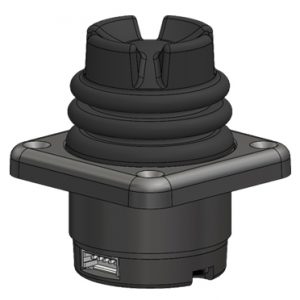
 Designers often treat stick force as a comfort choice, but in hall effect joysticks it shapes signal quality as much as feel. With higher preload, hall effect joysticks resist micro-movements that add noise, yet too much force can tire users and mask delicate aim. Teams prototyping hall effect joysticks balance ergonomic targets against joystick spring tension and sensitivity to preserve small-signal fidelity; for a deeper dive into prototyping trade-offs, learn more.
The magnets and sensor output look stable on paper, yet mechanical resistance changes mapping fidelity in hall effect joysticks during fast pivots and recoveries. Tighter springs in hall effect joysticks can linearize early travel but may compress midrange nuance. Engineers quantify stick tension impact on sensor linearity across the arc and adapt firmware curves; if you need test procedures and fixture ideas that complement these measurements, visit the site.
A subtle crosswind of forces affects how hall effect joysticks settle after quick nudges, especially when players ride the edge of motion. Proper tension helps hall effect joysticks hit center predictably without oscillation or wobble. Firmware completes the loop with deadzone and centering force calibration so hand variations don’t translate into aim creep; for examples of tuning windows that reduce accidental inputs while keeping control alive, read more.
Material choices in gimbals and bushings shift how hall effect joysticks age, so specifying spring rates alongside surface treatments is critical. Smooth hardware lets hall effect joysticks maintain repeatable return paths as friction evolves. Even copycat designs can diverge here, which is why some labs benchmark hall effect joysticks against a known standard; if you’re comparing lab protocols for apples-to-apples evaluation, learn more.
On the dynamics side, the spring’s preload and gradient determine how hall effect joysticks re-center after flicks without overshoot. Slightly firmer setups in hall effect joysticks can sharpen snap-back, assisting aim resets under pressure. The interaction with return-to-center force in Hall effect sensors is evident when viewing trajectory plots; for a reference set of plots illustrating typical recovery envelopes, visit the site.
Long sessions reveal slow biases that only show up under real heat, humidity, and sweat, which is why stability defines elite hall effect joysticks. If the spring is too light, micro-bumps can nudge hall effect joysticks off their true neutral. Tighter systems may mask tiny jitter yet increase fatigue, while firmware filters chase hysteresis and drift in magnetic joystick sensors; for a checklist that separates mechanical from electrical root causes, read more.
Competitive players notice how feather inputs feel, and product teams shape that first gram of motion in hall effect joysticks with great care. Low starting force makes hall effect joysticks lively but harder to hold on-pixel during slow pans. The right preload cooperates with actuation force versus precision in analog sticks to transform minute finger cues into controllable motion; for benchmarking scripts that reveal threshold smoothness, learn more.
Response smoothness over travel also depends on how friction stacks with spring force inside hall effect joysticks, not just magnetic sensing. Firmware can complement mechanics so hall effect joysticks feel progressive rather than jumpy in the midrange. This is where actuation force versus precision in analog sticks connects with map shape, acceleration, and cap geometry; for curve libraries that speed AB testing across genres, visit the site.
Developers can tilt a design toward snappier strafes or steadier tracking by pairing tension choices with software curves in hall effect joysticks. Users who prefer light touch often want steadier low-end gain in hall effect joysticks to offset hand tremor. Smart response curve tuning for Hall effect thumbsticks unifies these goals without hiding detail; for examples showing crossover points that keep muscle memory intact, read more.
The magnetic path sets an upper bound on signal clarity, so geometric discipline matters as much as springs in hall effect joysticks. Consistent tension ensures predictable angles between magnets and sensors in hall effect joysticks as the stick moves through travel. Careful magnet alignment and resolution in joystick modules reduce interpolation errors before firmware correction; for fixturing tips that lock in repeatable geometry during assembly, learn more.
Production variance can nudge perception, so pilot runs should bracket tension targets for hall effect joysticks and correlate to telemetry. Field data often shows that slightly firmer hall effect joysticks post cleaner neutral histograms at equal playtime. That advantage grows when magnet alignment and resolution in joystick modules are tightly controlled; for a short guide to pairing QC metrics with user feedback loops, visit the site.
Ultimately, the right tension lets hands relax while signals stay crisp, a balance premium hall effect joysticks strive to achieve. Lighter-feel hall effect joysticks can sell comfort but risk wobble in travel extremes, whereas stiffer hall effect joysticks preserve micro-aim with added effort. Brands position around durability and feel trade-offs with higher stick tension depending on audience; for market positioning examples that convert specs into clear benefits, read more.