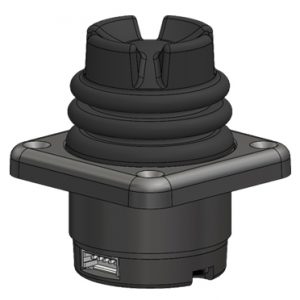
 What is centering error and why does it matter?
In control hardware, centering error is the measurable gap between where a stick should rest and where it actually reports zero, and it’s a core spec for hall effect joysticks because it governs fine input fidelity. Teams evaluating new platforms ask for a clear joystick centering error definition so they can compare devices on a common baseline, and they quickly notice how small deviations ripple into larger system behavior with hall effect joysticks.
If your product roadmap hinges on smooth micro-adjustments, you’re already thinking about hall effect joystick neutral position accuracy, particularly when validating prototype builds of hall effect joysticks; for a deeper dive into how that spec is tested across operating temperatures, learn more.
Tight builds reduce variability, but even within robust assemblies, magnetic sensor alignment tolerance can nudge the rest point, which is why DFM reviews for hall effect joysticks must include fixture repeatability and magnet placement control; for a rundown of best practices used by leading OEMs, visit the site.
Beyond static specs, real-world input feel is influenced by hysteresis and repeatability in joystick inputs, so engineering teams instrument hall effect joysticks on life-cycle rigs, log return vectors, and look for consistent decay to zero; this is where premium bearings, balanced springs, and magnet geometry help hall effect joysticks maintain a crisp, predictable center even after heavy use.
For readers mapping test protocols to product requirements, a quick primer on tolerance stacking, environmental drift, and certification thresholds can clarify next steps, read more.
To quantify center performance, labs benchmark linearity and centering performance metrics while running synthetic motion profiles that sweep, snap, and dither around zero; this yields comparable plots to rank hall effect joysticks and verify that firmware filters aren’t masking hardware issues in hall effect joysticks.
Competitive gamers and robotics operators often notice the impact of centering error on aiming precision before the numbers reveal it, which is why UI teams simulate headroom for fine control when integrating hall effect joysticks, and why designers tune response curves to preserve tiny inputs near center—if you’d like a short checklist for field trials, learn more.
Mechanical symmetry helps, but electronics matter just as much: sensor offset and bias in joysticks can creep with temperature or supply variance, so robust boards pair stable references with calibration routines to keep hall effect joysticks honest under load and ensure repeatable neutral behavior in hall effect joysticks.
Procurement teams comparing BOMs should also weigh validation depth, because certification-grade testing exposes how hall effect joysticks behave at low voltage and high humidity; for a quick comparison worksheet to standardize vendor scoring, visit the site.
During long sessions, return-to-center drift in analog sticks may surface as a slow crawl in one axis, so engineers watch thermal ramps and shock/vibe cycles to see whether hall effect joysticks maintain steady zeros, and they model spring relaxation to predict maintenance intervals for fleets using hall effect joysticks.
If you maintain peripheral firmware, you’ll want traceable routines for self-checks that flag neutral deviations before they affect users, read more.
On the software side, deadzone calibration hall effect sensors provides a safety margin around zero that swallows residual noise; the trick is to keep that zone narrow enough that hall effect joysticks retain micro-aim fidelity, while still masking tiny shifts that accumulate in hall effect joysticks during early life.
For studio workflows, mapping calibration to player profiles and device IDs reduces surprises during updates and minimizes the need for manual tweaks across different batches, learn more.
Field returns often trace to setup rather than failure, which is why documented joystick calibration to reduce centering bias can extend perceived device life; pairing that with solid QA ensures hall effect joysticks deliver consistent feel and that production-test signatures match what users experience with hall effect joysticks.
If you manage support content, it’s worth publishing a brief, visual guide that shows how to interpret neutral readings before and after calibration sessions, visit the site.
During EVT, you’ll confirm hall effect joystick neutral position accuracy again, this time with full enclosure effects, cable routing, and EMI sources present; a stable zero here signals that hall effect joysticks will behave reliably across SKUs and that your corrective filters won’t have to overwork in deployed hall effect joysticks.
Operational teams benefit from a simple service script that checks center variance after transport or long storage, read more.
Production metrology should still sample late-stage assemblies to ensure magnet centering and magnetic sensor alignment tolerance remain inside spec, because enclosure stress and fastener torque can subtly shift rest points; sustained vigilance keeps hall effect joysticks predictable for end users and protects brand trust in hall effect joysticks.
When reporting up to leadership, reiterate the joystick centering error definition and connect it to downstream KPIs like player accuracy and robot path smoothness; tying a concrete lab metric to user-visible outcomes underscores why hall effect joysticks deserve thoughtful validation in any premium control stack, and for an executive-ready summary template, learn more.
Procurement, QA, and firmware teams can align on a shared rubric that weights linear drift, static offset, and variance across units; if you need a starter rubric that maps these to release gates, visit the site.
In deployment, publish a brief how-to so users can confirm that hall effect joysticks read zero without pressure, then log the result in-app to catch anomalies early; small prompts like this sustain confidence in hall effect joysticks during the first-use experience, read more.
Studios optimizing aim assist and deadzone curves should A/B test with identical content across cohorts to quantify how hall effect joysticks alter micro-movement confidence, then propagate the winning profile through updates; consistent tuning keeps hall effect joysticks feeling natural across titles, learn more.