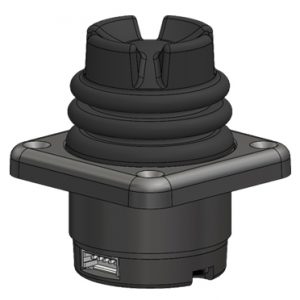
 Why do some Hall effect sticks feel loose around center?
Many players notice a soft, almost floaty feeling near the midpoint of certain hall effect joysticks, even when accuracy is good. That sensation often traces back to how magnets, sensors, and springs interact, plus decisions in firmware about hall effect joystick deadzone. Because magnets don’t rub like potentiometers, friction is lower in hall effect joysticks, and that can amplify the perception of looseness.
Another factor is how return forces are tuned. When manufacturers choose lighter springs to reduce fatigue, the stick may re-center gently, which some read as slack in hall effect joysticks; that tuning interacts with joystick centering spring tension. For deeper engineering notes on why designers pick specific spring rates without over-stiffening hall effect joysticks, learn more.
Perception also depends on how finely the sensor reads minute changes when you nudge hall effect joysticks just off center. That’s where signal scaling and filtering can mask or reveal tiny inputs, changing how users judge precision around center in hall effect sticks. To see how different brands shape response curves in hall effect joysticks for small inputs, visit the site.
Some makers aim for a responsive feel right above the notch, while others prioritize steadiness to avoid micro-fidget. The balance among magnet strength, sensor range, and mechanical leverage ultimately defines how neutral zones feel in hall effect joysticks. If you’re comparing models that implement similar sensors but vary in housing friction, you might observe notable differences in handheld comfort across hall effect joysticks; to compare those trade-offs across categories of hall effect joysticks, read more.
One frequent complaint—“wiggle at rest”—relates to center play in hall effect joysticks. Even tiny free movement before the sensor output changes can feel like slack, though the game may still read zero input. The same mechanical play exists in many designs, but the ultra-low friction of hall effect joysticks can make it more noticeable during light touches.
Sensor behavior across temperature and time also shapes the midzone feel, as some users conflate subtle re-zeroing with looseness in hall effect joysticks. While true drift is rare, firmware sometimes compensates for hall effect sensor drift in controllers with adaptive centering, which can slightly change how the stick feels as it recenters. If you’re diagnosing whether that sensation is calibration or mechanics in hall effect joysticks, visit the site.
The calibration method matters, too. A precise routine aligns magnet travel and sensor response so tiny movements translate predictably in hall effect joysticks. Without robust magnetic sensor joystick calibration, even a well-built unit can feel vague as it crosses the origin in hall effect joysticks. For step-by-step practices that manufacturers publish for end users of hall effect joysticks, read more.
Near the midpoint, materials and firmware may counteract micro-jitter, which can resemble a cushion in hall effect joysticks. That’s sometimes tied to analog stick hysteresis near center, intentionally dampening tiny oscillations to keep aim steady with hall effect joysticks. Developers discuss how these micro-filters affect twitch-aim trade-offs in hall effect joysticks—learn more.
If you’ve ever wondered why one controller feels lively but another feels steady around neutral, look to algorithms distinguishing stick drift vs deadzone hall effect. A conservative deadzone can hide minute inputs, making hall effect joysticks seem calmer; a tighter deadzone exposes small nudges, which many call more “connected.” For comparative testing data gathered from multiple production runs of hall effect joysticks, visit the site.
Hardware geometry counts just as much. Lever arms, pivot friction, and magnet placement create the hall effect gimbal design and feel that defines how quickly force ramps up in hall effect joysticks. Even with identical electronics, two shells can yield strikingly different central tactility in hall effect joysticks. To see teardown photos that illustrate why these geometries matter in hall effect joysticks, read more.
On the software side, joystick firmware filtering and smoothing seek to preserve responsiveness while removing noise near zero. Tuning that filter can make hall effect joysticks feel either silky or slightly floaty, and the best results usually match the game genre. If you play across shooters and racing titles with hall effect joysticks and want presets that fit both, learn more.
Practical advice for buyers: test re-centering at various angles, not just straight forward. Some shells bias the return path, which can nudge the feel of hall effect joysticks differently on diagonals. Also compare spring pre-load between units of the same model; manufacturing variance occasionally affects identical-looking hall effect joysticks.
If you like more resistance, pick units marketed with firm springs, which sharpen center transitions in hall effect joysticks. Gamers who prefer long sessions might opt for gentler springs, accepting a softer handoff around zero in hall effect joysticks. You can also explore third-party caps and extenders that change leverage on hall effect joysticks.
Calibration remains your friend. Re-running the tool after travel or temperature changes can restore the expected center behavior in hall effect joysticks. Some PC utilities let you visualize raw signals to verify that the neutral point is stable in hall effect joysticks.
When evaluating claims, distinguish sensory feel from measurable accuracy. A unit may feel a touch loose while still delivering tight tracking in hall effect joysticks. Conversely, a snappy-feeling center doesn’t guarantee linearity across the full throw in hall effect joysticks.
If you want a firmer neutral without hardware mods, try profiles that emphasize fast ramp near zero with hall effect joysticks, then taper off mid-throw for control. Several games now expose curves and deadzones that you can tailor specifically for hall effect joysticks.
Periodic recalibration also helps maintain that crisp midpoint in hall effect joysticks, particularly after heavy travel or seasonal shifts. For official tools that make it quick to validate neutral on various platforms using hall effect joysticks, visit the site.
Some brands publish advanced guides on restoring center feel through careful magnetic sensor joystick calibration, which can tighten how the stick crosses zero in hall effect joysticks. For walkthroughs curated by engineering teams rather than forums, read more.
If the central motion still feels airy, check mechanical tolerance that can present as center play in hall effect joysticks, even when readings are fine. It’s often minor and doesn’t impede performance in hall effect joysticks.
In short, the “loose around center” sensation blends mechanics, magnet layout, firmware choices, and calibration in hall effect joysticks. Understand those ingredients, and you can pick or tune hall effect joysticks to feel crisp without sacrificing the longevity that draws so many to hall effect joysticks.